


EIP Flex 36 Breakdown: What T-Mobile's $0-Down Financing Push Actually Means for Your Store
- Wireless Dealer Group

- 2 hours ago
- 5 min read
Longer device financing terms are back in the conversation, and "Flex 36"-style plans — 36-month, $0-down equipment installment plans — are showing up in more carrier and dealer discussions. If you sell postpaid on the T-Mobile side, this is worth understanding before your next big weekend.
Here's the plain-English version, plus what actually changes behind your counter.
First, what an EIP even is
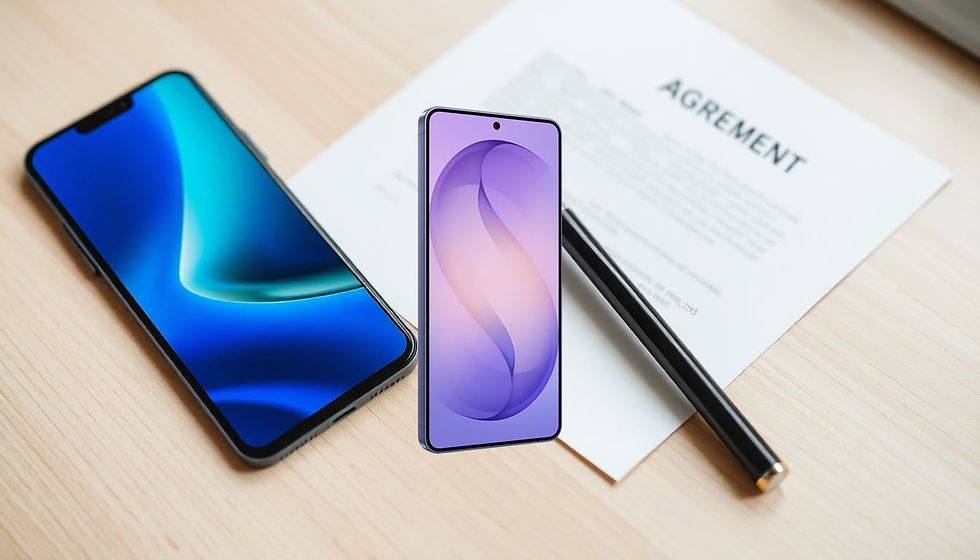
EIP stands for Equipment Installment Plan. Translation: the customer doesn't pay for the phone up front. They pay it off in monthly chunks on their wireless bill, usually with no interest, and the carrier (or its financing partner) carries the paper.
"Flex 36" is shorthand for a 36-month version — three years of payments instead of the 24-month term that dominated the last decade. Add "$0 down" and the customer walks out with a flagship device without opening their wallet at the register, assuming they qualify.
Quick note to avoid confusion: EIP Flex 36 has nothing to do with Flex Mobile, the MVNO brand. Same word, totally different thing. Different lane entirely.
Who this actually affects
Be honest about your segment before you get excited.
Authorized postpaid retailers and indirect T-Mobile dealers: this is your story. Longer terms directly change your close rate, your upgrade cycle, and your promo stacking.
Prepaid stores and MVNO dealers: mostly spectator sport. Your customers buy handsets outright or use third-party financing. What it may change is competitive pressure — a $0-down flagship across the street is a real objection to handle.
Repair shops: could cut either way. More new devices in market may mean fewer repairs on aging hardware. But a customer three years into a payment plan has a strong reason to fix a cracked screen instead of walking away from a balance.
ISPs, home security dealers, call centers: limited direct impact, though the same financing logic (long term, low monthly, sticky customer) is showing up across connected-device sales generally.
Why carriers stretch the term
The monthly number is the sales pitch. That's it. That's the whole strategy.
Spread the same device cost over 36 months instead of 24 and the line item on the bill drops meaningfully — without the carrier discounting the phone at all. For a shopper comparing monthlies, that's persuasive.
The second reason is retention. A customer with a balance is a customer who thinks twice before porting out. Longer term, longer runway. Carriers have been open about wanting stickier postpaid accounts, and this is one lever that doesn't require cutting rate plan pricing.
It's not a new idea — the industry has drifted this direction for years, and similar moves have shown up as carriers reposition their prepaid and postpaid brands. We wrote about one version of that repositioning in our look at what Boost Mobile's hybrid MVNO future means for dealers.
What changes on your sales floor
1. The objection moves
With $0 down, "I can't afford that phone today" mostly goes away. What replaces it is "how long am I locked in?" Your staff needs a clean, honest answer for that — not a dodge.
2. Your upgrade cycle stretches
This is the part dealers underrate. If a customer is 36 months into a balance instead of 24, your natural upgrade conversation with that customer may be delayed by roughly a year. That affects your traffic forecast, your accessory attach opportunities, and your staffing plan.
Some operators see this as a fair trade for a higher close rate today. Others would rather keep the shorter cycle. There isn't one right answer, and it depends heavily on how your store gets compensated.
3. Trade-in and promo credits get more complicated

Promotional credits are usually applied over the life of the agreement. Stretch the agreement and you stretch the credits. A customer expecting a device "paid off" by promo credits needs to understand that the credits may run the full term, and that they typically stop if the line is canceled or changed.
Say that out loud at the counter. Every time. Confused customers become chargebacks.
4. Approvals aren't a given
EIP approval depends on a credit decision, and no dealer can promise a customer they'll qualify or that they'll get $0 down. Some customers may be approved with a down payment requirement or a device limit instead. Train your team to present it as "let's see what you qualify for," not "you're approved."
Run your own numbers
Don't take anyone's word — including ours — on what a longer term does to your P&L. Build a simple model.
As a purely hypothetical example: if a $1,000 device is spread over 24 months, the customer sees roughly $41.67 a month. Spread over 36 months, that same $1,000 becomes about $27.78 a month. Same total, very different pitch. Those are illustration numbers only — actual device costs, taxes, down payment requirements, and any fees depend on the specific plan and customer, and taxes on the full device price are often due up front in many states.
Then model the other side:
Estimate how many additional units the lower monthly may help you close.
Estimate the delay in your repeat upgrade traffic.
Check your compensation and chargeback terms — how long is the clawback window, and does term length affect it?
Look at your accessory and protection attach rates, which often carry better margin than the handset itself.
Your master agent or rep should be able to walk you through the current comp structure in writing. Get it in writing. If you're still shopping representation, our master agent and vendor listings are a starting point for comparing who you work with.
Paperwork and disclosure

Consumer financing comes with disclosure obligations, and those rules vary by state. This is not legal advice — please have a qualified attorney review your customer-facing agreements, signage, and any script your team uses to describe financing terms. It's a cheap review compared to a complaint.
A few habits that tend to protect stores:
Show the full term and total device price on the receipt, not just the monthly.
Explain what happens to promo credits if the customer leaves early.
Keep signed copies of everything the customer initials.
Never describe an approval outcome before the system returns one.
Practical inventory notes
Longer financing terms usually push the mix toward higher-priced flagships, because the monthly still "feels" reasonable. That can shift what you should stock. If you carry T-Mobile-network handsets, it's worth re-checking your mix against current T-Mobile compatible wholesale phones so you're not sitting on entry-level inventory while demand moves upmarket.
And if you also run a prepaid or MVNO side of the house, remember that customers rejected for postpaid financing are still customers. Having a same-day prepaid option ready — with the APN setup steps handy for whichever brands you carry — turns a "no" into a sale instead of a walkout.
The short version
Thirty-six-month, $0-down financing is a monthly-payment story, not a discount. It may help you close more units today and may hold customers longer. It also stretches your upgrade cycle and puts more weight on clear disclosure at the counter.
Decide based on your own comp terms and your own traffic — not the headline.
Next step: if you're weighing whether to add or expand a carrier line, start with our dealer program details and compare the terms side by side with what you're offered today.




.webp)

Comments