

Google Pixel 10 Pro Fold vs Samsung Galaxy Z Fold 7: Foldable Dealer Guide
- Wireless Dealer Group

- Dec 19, 2025
- 10 min read
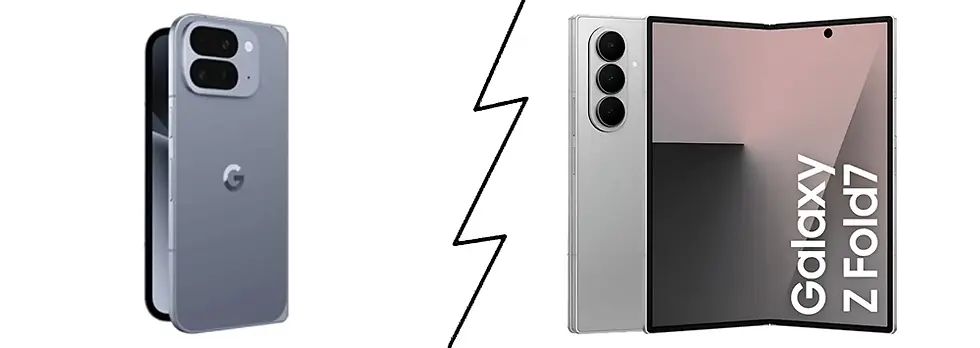
Google Pixel 10 Pro Fold vs Samsung Galaxy Z Fold 7: The foldable flagship battle intensifies. This dealer-focused comparison breaks down specs, durability improvements, profit margins, customer targeting, and wholesale sourcing strategies for the latest generation of book-style foldables.
Introduction: The Foldable Revolution Reaches Maturity
The Google Pixel 10 Pro Fold vs Samsung Galaxy Z Fold 7 comparison represents a pivotal moment for wireless dealers. Foldable phones are no longer experimental curiosities—they're becoming mainstream premium devices with improving durability, better software optimization, and growing customer demand.
Samsung has dominated the foldable market for years, but Google's Pixel Fold line has emerged as a serious competitor with superior AI capabilities and camera performance. As a wireless dealer, understanding these two book-style foldables is essential for capturing the high-margin premium segment in 2025.
Let's break down everything you need to know to position, price, and profit from these innovative devices.
Quick Specs Comparison Table
Feature | Google Pixel 10 Pro Fold | Samsung Galaxy Z Fold 7 |
Cover Display | 6.3" OLED (2092 x 1080) | 6.4" Dynamic AMOLED 2X (2376 x 968) |
Main Display | 8.0" OLED (2208 x 1840) | 7.6" Dynamic AMOLED 2X (2176 x 1812) |
Refresh Rate | 120Hz (both screens) | 120Hz adaptive (both screens) |
Processor | Google Tensor G5 | Snapdragon 8 Gen 4 |
RAM | 16GB | 12GB / 16GB |
Storage Options | 256GB, 512GB | 256GB, 512GB, 1TB |
Rear Cameras | 50MP main, 48MP ultra-wide, 10.8MP telephoto (5x) | 50MP main, 12MP ultra-wide, 10MP telephoto (3x), 10MP telephoto (10x) |
Cover Camera | 10MP | 10MP |
Inner Camera | 8MP under-display | 4MP under-display |
Battery | 4,850 mAh | 4,600 mAh |
Charging | 30W wired, 20W wireless | 45W wired, 15W wireless |
Weight | 283g (9.98 oz) | 271g (9.56 oz) |
Folded Thickness | 12.1mm | 11.5mm |
Durability Rating | IPX8 water resistance | IP48 (dust & water resistance) |
OS | Android 15 | Android 15 (One UI 7) |
Price (MSRP) | $1,799+ | $1,899+ |
Hinge Design | Fluid Friction hinge | Flex hinge (improved) |
Design & Build Quality: Evolution of the Foldable Form Factor
Google Pixel 10 Pro Fold
Google's second-generation Pixel Fold refines the original design with a 12.1mm folded thickness and 283g weight. The Fluid Friction hinge allows the device to stay open at any angle, making it ideal for hands-free video calls and content consumption. The wider cover display (6.3") feels more like a traditional phone when folded.
The polished aluminum frame and Gorilla Glass Victus 2 on both displays create a premium feel. Google's design philosophy prioritizes usability when folded—the cover screen is actually usable for one-handed tasks, unlike earlier foldables.
Dealer Tip: The Pixel Fold's wider cover screen is a major selling point. Let customers hold it folded and compare it to the narrower Samsung cover display. Many customers prefer Google's more traditional phone-like proportions when closed.
Samsung Galaxy Z Fold 7
Samsung's seventh-generation Z Fold is the most refined yet at 11.5mm folded thickness and 271g weight—lighter and thinner than the Pixel. The improved Flex hinge reduces the crease visibility and provides a more satisfying fold. The narrow cover display (6.4") maintains Samsung's signature tall, slim profile.
Samsung's Armor Aluminum frame and new ultra-thin glass on the main display represent the pinnacle of foldable durability. The IP48 rating (dust and water resistance) is industry-leading—a first for foldables with meaningful dust protection.
Dealer Tip: Samsung's IP48 rating is a breakthrough. Emphasize this to customers worried about durability. The Google Pixel 10 Pro Fold vs Samsung Galaxy Z Fold 7 durability conversation now favors Samsung with actual dust resistance certification.
Display Comparison: Screen Size, Quality, and Crease Visibility
Google Pixel 10 Pro Fold Displays
Cover Display: 6.3" OLED (2092 x 1080), 120Hz, more usable proportions
Main Display: 8.0" OLED (2208 x 1840), 120Hz, larger tablet experience
Peak Brightness: 1,800 nits (cover), 1,600 nits (main)
Crease: Visible but less prominent than previous generation
Google's larger 8.0" main display provides more screen real estate for multitasking and media consumption. The wider aspect ratio feels more like a small tablet. The cover display's usable width makes it practical for everyday tasks without unfolding.
Samsung Galaxy Z Fold 7 Displays
Cover Display: 6.4" Dynamic AMOLED 2X (2376 x 968), 120Hz, narrow but tall
Main Display: 7.6" Dynamic AMOLED 2X (2176 x 1812), 120Hz, refined tablet experience
Peak Brightness: 2,600 nits (both displays)
Crease: Least visible crease in any foldable (improved hinge design)
Samsung's displays are brighter (2,600 nits peak) and the crease is less noticeable than ever. The narrow cover display takes getting used to but allows for a more compact folded footprint. The main display's refined aspect ratio is optimized for split-screen multitasking.
Dealer Insight: Let customers handle both devices. Some prefer Google's wider cover screen for one-handed use; others prefer Samsung's narrower profile for pocketability. The main display size difference (8.0" vs 7.6") is noticeable when watching videos or reading.
Performance: Tensor G5 vs Snapdragon 8 Gen 4
Google Pixel 10 Pro Fold
The Google Tensor G5 with 16GB RAM is optimized for AI and machine learning tasks. While not the fastest chip on paper, it excels at computational photography, real-time translation, voice recognition, and Google's AI features. Everyday performance is smooth, and the extra RAM ensures excellent multitasking on the large display.
AI Capabilities: Magic Eraser, Best Take, Audio Magic Eraser, Live Translate, Call Screen, and advanced voice typing work seamlessly.
Samsung Galaxy Z Fold 7
The Snapdragon 8 Gen 4 with 12GB or 16GB RAM delivers flagship performance with superior gaming capabilities and raw processing power. Samsung's optimization for the foldable form factor includes enhanced multitasking features, DeX mode for desktop productivity, and seamless app continuity between displays.
Multitasking Features: Up to 3 apps simultaneously, drag-and-drop between apps, pop-up windows, and Edge panels for quick access.
Dealer Tip: Position Google Pixel for AI enthusiasts and productivity users who value Google's software intelligence. Position Samsung for power users, gamers, and business professionals who need DeX mode and maximum performance.
Camera Systems: Google's Computational Photography vs Samsung's Versatility
Camera Spec | Google Pixel 10 Pro Fold | Samsung Galaxy Z Fold 7 |
Main Sensor | 50MP (f/1.7, OIS) | 50MP (f/1.8, OIS) |
Ultra-Wide | 48MP (f/1.9, 125°) | 12MP (f/2.2, 123°) |
Telephoto | 10.8MP (5x optical, f/3.1) | 10MP (3x, f/2.4) + 10MP (10x, f/4.9) |
Cover Camera | 10MP (f/2.2) | 10MP (f/2.2) |
Inner Camera | 8MP under-display | 4MP under-display |
Video | 4K 60fps, 10-bit HDR | 8K 30fps, 4K 60fps |
Night Mode | Exceptional (Night Sight) | Excellent (Nightography) |
AI Features | Magic Eraser, Best Take, Photo Unblur | Galaxy AI editing, object removal |
Google Pixel 10 Pro Fold Camera Strengths
Best-in-class computational photography with Tensor G5
Night Sight produces incredible low-light photos
48MP ultra-wide captures more detail than Samsung's 12MP
Natural, accurate colors straight out of camera
Magic Eraser and AI editing tools built-in
Better under-display camera (8MP vs 4MP) for video calls
Samsung Galaxy Z Fold 7 Camera Strengths
Dual telephoto system (3x and 10x optical) for zoom versatility
8K video recording for future-proofing
Expert RAW mode for photography enthusiasts
Flex mode allows hands-free photos using the hinge
Cover screen preview lets subjects see themselves (great for selfies)
Dealer Sales Strategy: Google wins for point-and-shoot simplicity and low-light performance. Samsung wins for zoom versatility and professional controls. Ask customers: "Do you prefer automatic great photos or manual control?" This reveals whether they're Pixel or Samsung customers.
Software & Foldable Optimization: Android 15 Done Two Ways
Google Pixel 10 Pro Fold (Stock Android 15)
7 years of OS and security updates (industry-leading)
Clean Android experience with Google's AI features
Seamless app continuity between cover and main displays
Split-screen multitasking with drag-and-drop
Taskbar for quick app switching
Google AI features: Live Translate, Call Screen, Recorder transcription
Fast updates: First to receive new Android features
Samsung Galaxy Z Fold 7 (One UI 7 on Android 15)
7 years of OS and security updates
One UI 7 optimizations specifically for foldables
Advanced multitasking: Up to 3 apps, pop-up windows, Edge panels
DeX mode for desktop-like productivity
Flex mode optimizations for partially folded use
Galaxy AI features throughout the system
Customization options beyond stock Android
Samsung ecosystem integration (Galaxy Watch, Buds, tablets)
Dealer Insight: Samsung's One UI has more foldable-specific features and deeper multitasking capabilities. Google's stock Android is cleaner and receives updates faster. Business professionals who need DeX mode lean Samsung. Users who want the "pure Google experience" prefer Pixel.
Durability & Longevity: The Foldable Concern Addressed
Google Pixel 10 Pro Fold Durability
IPX8 water resistance (up to 1.5m for 30 minutes)
No dust resistance rating
Gorilla Glass Victus 2 on cover display
Ultra-thin glass on main display
Fluid Friction hinge rated for 200,000+ folds
1-year warranty standard
Samsung Galaxy Z Fold 7 Durability
IP48 rating (water resistance + dust protection for particles >1mm)
Industry-first meaningful dust resistance
Gorilla Glass Victus 3 on cover display
Ultra-thin glass with improved coating on main display
Flex hinge rated for 200,000+ folds
1-year warranty standard (Samsung Care+ available)
Dealer Reality Check: Samsung's IP48 rating is a game-changer for foldable durability perception. This is the first foldable with certified dust protection. Use this as a key selling point to overcome durability concerns. Both devices are significantly more durable than early foldables, but Samsung has the edge with dust resistance.
Accessory Opportunity: Recommend extended warranties and protection plans for both devices. Stock cases from accessories distributors specifically designed for foldables—these are high-margin add-ons that customers readily accept for $1,800+ devices.
Battery Life & Charging: Powering Dual Displays
Google Pixel 10 Pro Fold
4,850 mAh battery
All-day battery life with moderate use
30W fast charging (0-50% in ~30 minutes)
20W wireless charging
Battery Share (reverse wireless charging)
Adaptive Battery AI optimization
Samsung Galaxy Z Fold 7
4,600 mAh battery
All-day battery life with moderate use
45W fast charging (0-50% in ~20 minutes)
15W wireless charging
Wireless PowerShare (reverse wireless charging)
Adaptive power saving
Dealer Tip: Google has a larger battery (4,850 mAh vs 4,600 mAh) but Samsung charges faster (45W vs 30W). Both last a full day with typical use. Heavy users who unfold frequently may need midday charging—this is your opportunity to upsell fast chargers and portable power banks from your electronics distributors.
Pricing & Profit Margins: Premium Foldable Economics
Retail Pricing (MSRP)
Google Pixel 10 Pro Fold: $1,799 (256GB), $1,919 (512GB)
Samsung Galaxy Z Fold 7: $1,899 (256GB), $2,019 (512GB), $2,259 (1TB)
Dealer Considerations
Google Pixel 10 Pro Fold: $100 cheaper entry point, better margins (8-14%), slower turnover, limited supply initially
Samsung Galaxy Z Fold 7: Higher price, established customer base, moderate margins (6-12%), faster turnover, better supply chain
Trade-in Programs: Both support aggressive trade-ins to offset high prices. Samsung has more established trade-in infrastructure.
Carrier Promotions: Expect $800-1,000 off with eligible trade-ins and new lines. Samsung typically has more carrier partnerships.
Accessory Attach Rate: Foldable buyers purchase 2-3x more accessories than traditional phone buyers (cases, screen protectors, chargers, styluses)
Wholesale Sourcing: Foldables have limited production volumes compared to traditional flagships. Connect with reliable phones distributors early and secure your allocation. Google Pixel Folds especially have supply constraints due to lower production numbers.
Profit Maximization Strategy: The real profit in foldables comes from accessories and protection plans. Bundle cases, screen protectors, and extended warranties at checkout. Foldable buyers are premium customers who value protection for their investment.
Target Customer Profiles: Who Buys Foldable Phones?
Google Pixel 10 Pro Fold Buyers
Tech enthusiasts and early adopters
Age 30-50, higher income professionals
Google ecosystem users (Pixel phones, Nest, Chromebook)
Value: Best camera, AI features, clean software, faster updates
Professions: Tech workers, photographers, content creators, productivity-focused professionals
Pain Points: Want the best camera in a foldable, prefer stock Android
Samsung Galaxy Z Fold 7 Buyers
Power users and multitaskers
Age 30-55, business professionals and executives
Samsung ecosystem users (Galaxy phones, Watch, Buds, tablets)
Value: Proven durability, DeX mode, advanced multitasking, S Pen support (sold separately)
Professions: Business executives, consultants, financial professionals, digital nomads
Pain Points: Need desktop-like productivity on the go, want maximum screen real estate
Dealer Sales Tip: Ask qualifying questions: "What do you use your phone for most?" "Do you multitask heavily?" "Is camera quality your top priority?" "Do you need a device that can replace a laptop?" These answers reveal whether they're Google Pixel 10 Pro Fold or Samsung Galaxy Z Fold 7 customers.
Accessories & Add-On Revenue: The Foldable Goldmine
Foldable phones create exceptional accessory revenue opportunities. Customers spending $1,800+ are receptive to protection and enhancement accessories:
Must-Stock Foldable Accessories
Foldable-specific cases (hinge protection, slim profile) - $40-80 retail
Main display screen protectors (pre-installed or DIY) - $30-50
Cover display screen protectors - $15-25
S Pen for Galaxy Z Fold 7 (sold separately) - $50-100
45W fast chargers (neither includes fast chargers) - $30-50
Wireless charging stands optimized for foldables - $40-70
Portable power banks (20,000mAh+) - $40-80
Camera lens protectors - $15-25
Hinge cleaning kits - $ 10-20
Dealer Strategy: Create a "Foldable Essentials Bundle" that includes a case, screen protectors, and fast charger. Offer it at a slight discount ($120-150 bundle vs $140-170 individual) to increase attachment rate. Position it as "essential protection for your investment."
Partner with OEM accessories distributors and licensed accessories distributors to stock premium foldable-specific accessories. Generic cases don't work—foldable accessories must be device-specific.
Extended Warranty Opportunity: Foldable buyers have higher anxiety about durability. Offer extended protection plans (Samsung Care+, Google Preferred Care, or third-party) with every foldable sale. Attachment rates of 40-60% are common for foldables vs 15-25% for traditional phones.
The Verdict: Which Foldable Should You Stock?
Stock Google Pixel 10 Pro Fold If:
Your customer base includes tech enthusiasts and photography lovers
You want higher profit margins per unit (8-14%)
Your market values Google's AI capabilities and clean Android experience
You can handle limited initial supply and educate customers on a newer foldable brand
Your customers prioritize camera quality above all else
Stock Samsung Galaxy Z Fold 7 If:
Your customer base includes business professionals and power users
You want faster inventory turnover with established brand recognition
Your market has strong Samsung ecosystem loyalty
You need reliable supply chain and carrier partnerships
Your customers need DeX mode and maximum productivity features
The Smart Play: Stock Both in the Right Ratio
Most successful wireless dealers will carry both foldables to capture different customer segments. Samsung will likely outsell Google 3:1 or 4:1 due to brand recognition, established foldable reputation, and better supply. However, Google Pixel offers better margins and attracts premium customers who value photography and AI.
Recommended Inventory Split:
Samsung-heavy markets: 80% Galaxy Z Fold 7 / 20% Pixel 10 Pro Fold
Balanced markets: 70% Galaxy Z Fold 7 / 30% Pixel 10 Pro Fold
Tech-forward markets: 60% Galaxy Z Fold 7 / 40% Pixel 10 Pro Fold
Initial Launch Strategy: Start with 2-3 units of each model. Foldables are high-value, low-volume devices. Don't overstock—these tie up significant capital. Reorder based on demand patterns in your specific market.
Final Dealer Tips for Foldable Success
Create an interactive foldable display where customers can touch, fold, and unfold both devices. Foldables must be experienced hands-on.
Train staff on durability talking points: IP48 rating, 200,000+ fold rating, improved hinge technology. Overcome the "foldables are fragile" perception.
Demonstrate key features: Split-screen multitasking, Flex mode, cover screen usability, camera capabilities.
Bundle accessories aggressively: Cases, screen protectors, and chargers should be standard add-ons. Aim for 80%+ accessory attachment rate.
Offer extended warranties: Position protection plans as essential for foldables. Target 50%+ attachment rate.
Leverage trade-in programs: Foldable prices are high—trade-ins reduce sticker shock. Partner with carriers for maximum trade-in value.
Highlight use cases: "Replace your tablet," "Desktop productivity on the go," "Best camera in a foldable," "Ultimate multitasking device."
Address durability concerns proactively: Show warranty details, explain IP ratings, demonstrate hinge quality.
Know your customer: Ask about their workflow, current devices, and pain points. Match the right foldable to their needs.
Source early from distributors: Foldables have limited production. Secure inventory before launch to avoid stockouts.
The Google Pixel 10 Pro Fold vs Samsung Galaxy Z Fold 7 comparison represents the maturation of foldable technology. Both devices are durable, capable, and ready for mainstream adoption. Samsung leads in brand recognition and ecosystem, while Google excels in camera and AI capabilities.
As a wireless dealer, foldables represent your highest-margin opportunity in the premium segment. These aren't just phones—they're statement devices that attract affluent customers willing to pay for innovation. Master the positioning, stock the right accessories, and you'll build a profitable foldable business in 2025.
Ready to source these premium foldables? Connect with trusted wholesale vendors through the Wireless Dealer Group directory and secure your foldable inventory before launch day. Don't forget to stock foldable-specific accessories to maximize your profit per sale.


.webp)

Comments